
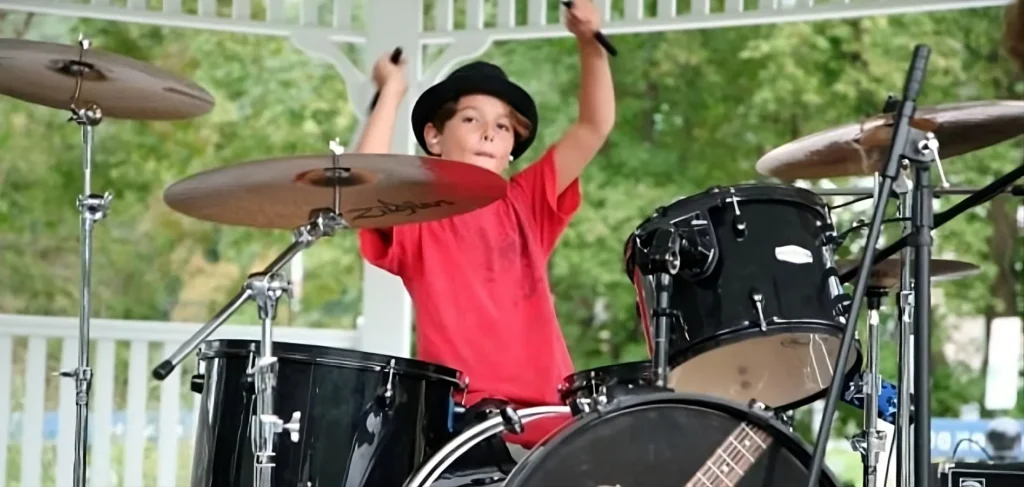
Drum Lessons for Beginners and Beyond
Introducing drums to aspiring musicians can spark their creativity. It’s a joyful way for kids or adults to explore music. Drumming can improve coordination and focus. Plus, it’s a fun, energetic activity that can relieve stress and promote happiness. Ready to start you or your child’s drumming adventure? Fill out our form here to help us best match your child to a suitable instructor.
Drumming is a skill that can be learned by anyone, regardless of age or musical background. Whether you are a child or an adult, beginner drum lessons can provide a solid foundation for your musical journey. At Music in Chappaqua, our instructors help students understand rhythm and improve coordination.
Why Start with Drum Lessons?
Drum lessons are a great way to learn music while having fun. By learning to play drums, beginners can improve their coordination and rhythm. This helps in other life areas, including academics and sports. Drumming also relieves stress and provides a creative outlet. It’s a rewarding hobby that offers benefits beyond just music, including boosting cognitive ability.
Understanding the Drum Kit Components
A drum kit is a set of various instruments that together create rhythm. Learning these parts helps beginners understand their role.
- Snare
- Cymbals
- Hi-Hats
- Tom
The snare drum provides sharp, crisp sounds essential for rhythm. It’s often the centerpiece of any beginner setup. Cymbals, hi-hats, and toms add flair and depth. Each plays a crucial role in creating diverse drumming patterns.
Basic Drumming Techniques for Beginners
Getting a proper grip on the drumsticks is essential for control and power. Beginners should practice holding the sticks correctly. Mastering different stroke types is crucial. These strokes include full, tap, and down stroke, each serving unique functions. Proper posture while playing can prevent injury. Sitting at the correct height helps maintain balance and comfort during sessions.
Beginners should also focus on maintaining steady beats. Consistent practice with a metronome strengthens timing and rhythm.
Developing a Practice Routine
A well-structured practice routine is key to learning. Consistency helps to build skills effectively over time. We encourage students to practice daily. Breaking session into manageable parts allows focusing on different techniques and helps to prevent burnout.
Here’s a simple practice structure:
- Warm-up with basic beats
- Practice new techniques
- End with a fun song
Reading Drum Notation
We start with simple notes to cycle through drum notation to develop rhythm with the goal of incorporating more complex beats with progress. We practice reading sheet music to improve student’s skills there as well.
The Importance of Rhythm and Timing
Enjoying the Journey
Some students have the passion, talent, and desire to make it to the big stage. Every student willing to make the effort will grow in skills and confidence during their musical journey, learning important lessons and possibly making lifelong friends. Introducing drums to children can spark their creativity. Ready to find out more? Fill out our form here to help us best match you or your child to a suitable instructor.
Frequently Asked Questions
- How long does it typically take to become good at playing drums?
- Is it too late for my child to learn how to play drums?
- What are the best songs to select to become a good drummer?
- Can I enroll my child for drums if I don’t have a set at home?
- How much do drum lessons cost?
We are ready to answer your questions at (914) 238-3123
ALUMNI COLLEGE ACCEPTANCES

Get in touch with Music in Chappaqua
Serving music students in Chappaqua, Pleasantville, Armonk, Briarcliff Manor, Millwood & Northern Westchester
- 225 North Greeley Avenue, Chappaqua, NY 10514